1.21.2012

Taking Liberties with Miss Burnett


No self respecting Anglophile could possibly be less enthusiastic about season two of Downton Abbey than I. And it seems that Downton-o-philia is everywhere these days. Reviewers all over the Internets are gushing over the escapades of the Grantham-Crawley-Carson family saga (Carson, the butler, being the stand-in for head of household among the downstairs servant family).

But I have a bit of a revelation about Downton that I've being suppressing for several months now. And it's time I tell you all about it.

Two years ago I discovered Persephone Press, a small independent publisher devoted to reissuing long lost late nineteeth and twentieth century authors - mostly British and nearly all women. The first (and so far, only) Persephone book I purchased is The Shuttle by Francis Hodgson Burnett, the same Ms. Burnett who wrote The Secret Garden. I selected the title mostly because of my familiarity with the author, but also because of the enticing plot description:

"The Shuttle, Persephone book no.71, is about American heiresses marrying English aristocrats; by extension it is about the effect of American energy, dynamism and affluence on an effete and impoverished English ruling class." But beyond this, the publisher says, "It is mainly about American energy and initiative and get-up-and-go; this is symbolised by G Selden, the typewriter salesman on a bicycling tour of England, who meets, and charms, Bettina [Van der Poel] and her sister and, back in New York, their father."

Sound familiar? Remember Downton's season one housemaid Gwen, who longed to break free from servitude by enrolling in a mail-order typewriter course? And plucky Gwen does eventually manage to succeed with the help of the youngest Grantham daughter, Lady Sibyl. Gwen's typewriter, along with electrified lamps and the telephone, are early markers in the series of modernity overtaking the Abbey.

The Shuttle, published in 1907, mainly concerns the lifeline provided by young American heiresses to the destitute English landed gentry. Their fortunes were essential to maintaining the great baronial estates.

But what's really interesting to me is the number of similarities between the Burnett novel and Sir Julian Fellowes' version. I wonder whether Mr. Fellowes had wandered into Persephone's shop on Lamb's Conduit Street and picked up a copy of The Shuttle, cocked his head, and thought, "Now here's an idea that I can work with."

So, while I wait for a reply to my question, please take a look at the beautiful piece of machinery above, which is more or less contemporary to The Shuttle and Downton Abbey.

The typewriter shown is The Empire 1 by Williams Mfg. Co., Montreal, Canada. 1892. This model originally sold for $75.00.

And how just modern was this turn of the century iPad? Here, the American G Selden describes the many features of the "Delkoff" typerwriter:

"It's the most up-to-date machine on the market. It has all the latest improved mechanical appliances. You will see from the cut in the catalogue that the platen roller is easily removed without a long mechanical operation. All you do is to slip two pins back and off comes the roller. There is also another point worth mentioning—the ribbon switch. By using this ribbon switch you can write in either red or blue ink while you are using only one ribbon. By throwing the switch on this side, you can use thirteen yards on the upper edge of the ribbon, by reversing it, you use thirteen yards on the lower edge—thus getting practically twenty-six yards of good, serviceable ribbon out of one that is only thirteen yards long—making a saving of fifty per cent. in your ribbon expenditure alone, which you will see is quite an item to any enterprising firm."

If only it was still that easy to save money on printer ink.

Sure, Sir Julian may claim that the structure of Downton was inspired by NYPD Blues and any number of other fast-paced American dramas. But the story line? Plenty of inspiration from other sources, including an obscure novel from one of Britain's best-loved authors.

In the meantime, it's only fair to give Ms. Burnett credit where it is due. Were she alive today, I believe she would be a first-rate and very successful television dramatist.

1.18.2012

Christmas in January

So, as we know Christmas officially lasts until the Feast of the Epiphany, which was January 8 this year. Hey, that was a mere 10 days ago. So is it OK to post Christmas photos now? Why not!


1.10.2012

Booked

While book shelves may be this blog's primary obsession, let's not forget that sometimes we need to carry our books with us. But why be pedestrian and use an ordinary backpack? These traditional satchels and bags are low-key alternatives. And so very British. Where do you stow your books?

This classic black leather Cambridge Satchel bag is the same one we gave to our daughter.


Here it is in classic tanned brown leather from Tom Brown. 
You can have any of their bags monogrammed.


Same bag, by Tom Brown, in Apple Green. These are the trendy versions, 
even in neon, that are so popular.


Here's Brooklyn Industries' modern waxed canvas version.


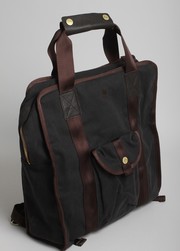
Reminds me of an old-school mail carrier bag:  from Brook Farm General Store. 
Probably my favorite.


And for those who need to hide their treasures while at boarding school,
including the rare first edition Harry Potter,
here's Tom Brown's traditional trunk in navy.


12.20.2011

Warm White Christmas

White, parchment, linen, stone, snow, cream, limewash, ivory, milk, chalk, natural, cotton, khaki, greige, plaster, buff, ice, taupe, alabaster, cloud.

Winter is the ideal time to explore white and all of its neutral cousins.

Start with the most comfortable seating, perfect for reading by the fire and eating popcorn.


George Sherlock Two-Seater sofa


Add some birch logs, or at least have them artfully arranged near the fireplace. They're pretty expensive, and you may be reluctant to burn them!


Birch logs


Decorate your mantel in soothing whites, evoking nature's winter beauty.


David Stark for West Elm topiary tree


Add a few funky handmade trees to your mantel-top forest.


Bottle Brush trees from West Elm


Ice the front of the mantel with this handmade paper garland.

Handmade paper bunting from Toast


Soften the room with frothy white hydrangeas, also a fresh reminder of warmer days to come.

White mophead hydrangea from Terrain

As you sit by the fire, wrap your gifts in plain white paper and finish them off with these tags. Your lucky friends can plant the tags - they're seeded!
Seeded Snowflake tags from Terrain


When it's time for bed, retreat to a cosy warm bed in a white bedroom. Don't forget your hot water bottle!


Master bedroom from Coastal Living

10.13.2011

Top Ten Design Features

What defines style today?

For your consideration, here is my Top Ten selection of features that have most inspired designers and consumers in the past five years or so. Although I could name several more, these are at the top of my list.

Today's designers now have an endless sourcebook for inspiration online. How did they figure this stuff out 10 or 15 years ago? Who knows?

1. Books/bookshelves.

Even in pared down, contemporary spaces, bookshelves are everywhere nowadays. I must list this feature first, of course!

Phillip Gorrivan living room

2. Gallery-style wall art collections.

Our definition of 'art' has matured. Favorite photos, drawings, found objects, flea market portraits and kids' art can all find space on the wall.

Kate and Andy Spade's NYC entry

3. Muscular design details.

Bold features are evident everywhere; delicate features are used only sparingly and to much greater effect. More often than not, furnishings and accessories are sculptural, even sensual.

Ruby Beets

4. Dark/light contrasts.

Black and gray have had a surprisingly long-lived moment. When combined with white, they add spark and (shock!) actually open up and brighten a space.

Thom Filicia showhouse bedroom

5. Continued emphasis on solids, tone-on-tone and geometric patterns.

Not the 90s variety of beige tones, but using contrasts (see No. 4) to add depth and graphic interest. Yes, I know florals are the next big thing on the horizon. But I expect to see those designs complementing or even accenting, rather than dominating a scheme, even in traditional interiors.

House and Home

6. Saturated colors.

Neutrals will always have their place, but when colors are used, they are vibrant and bold (and check out the black mantel).

Miles Redd

7. Luxury surfaces.

The selection of quality tile, stone, floor coverings, textiles, fixtures and paints has exploded recently. I suspect this is a result of research and development improvements in materials, improvements in manufacturing techniques, and access to a wider variety of natural materials. It also seems to me that pigments are far more various and of a higher quality. Generally speaking, today's consumers expect a much greater variety of options, courtesy of their iPad and laptop.

Ann Sacks Nottingham tile

8. Comfortable does not equal messy.

Today's furnishings and textiles are sturdy and have comfort built into them, so there is no excuse for oversized, frumpy sofas and chairs (or messy beds).

Michael Smith bedroom

9. Pared down window treatments.

Even in traditional interiors, consumers want a clean, light-enhancing view out of their windows. Fussy is out. Period.

Robert Courterier's country dining room

10. Recycled materials.

Found, repurposed, and handed down. Recycling furnishings and accessories is the easiest way to go green in your home.

Living Etc.

Which design features would you add to this list? Please let me know!

Dining Room Reno, Part 3: Renaissance

At long last, the final installment on our dining room transformation. After half a year of use, it is remarkable how much more we use this room. It serves as a study, office, breakfast room and of course, dining room, every day. Adding the wainscoting also lightened up this formerly dark space. 


Still on the punchlist:  install that shoe mold, already!


The "bump outs"also added dimension to the space while taking up very little extra footage.


The sisal rug from Home Decorators matches the rugs in the living room and entry. Pulling these elements together has helped to open up the entire first floor.


Still lots of space when we add the extra leaf to the table.


Lighting in the room is more balanced with the addition of the picture lights. I wish I could say the same about my picture-taking ability!


Tying in the wainscoting from the entry, through the kitchen and into the dining room gives the sense of one larger space, even though they are separate rooms. 

To sum:  We upgraded the HVAC and breathed life into a dark and underused space. Best of all, we visually tied together all of the rooms on the first floor, and we've done it with minimal structural changes. We like the basic size and layout of our house - no need to add on or tear down walls. 

10.11.2011

Apology

There appear to be technical difficulties with this blog. I hope to have the problem fixed soon - stay tuned!